
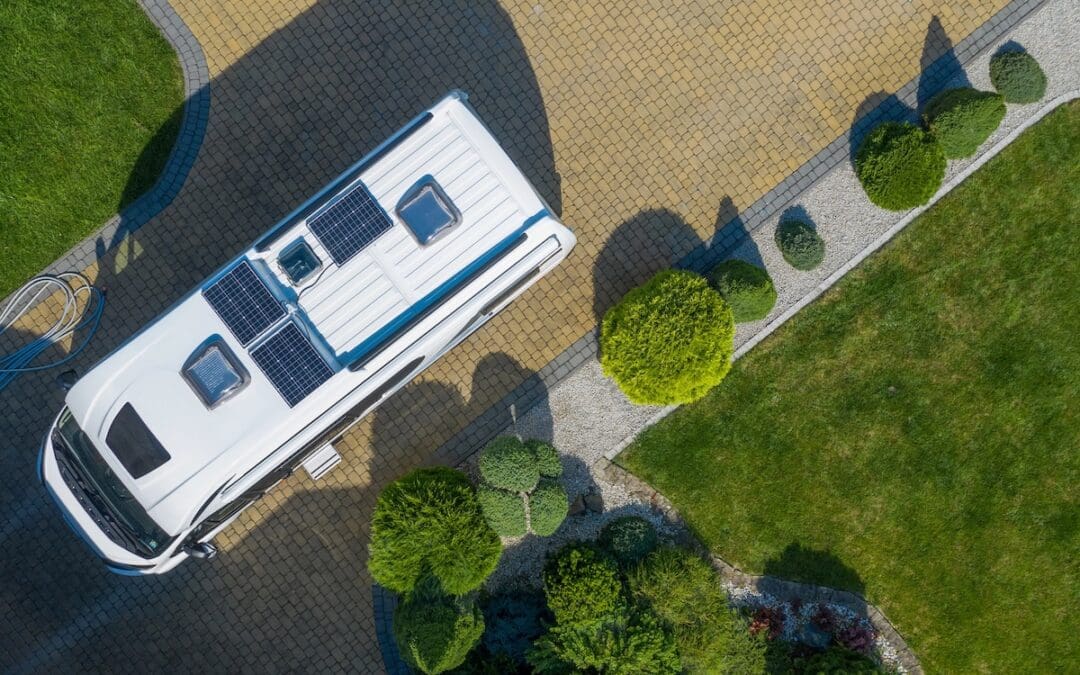
Your RV roof does more work than almost any other part of the rig. It bakes in the Texas sun, takes hail and falling branches, and shelters everything below it from rain. It’s also the part most owners look at least. Water that sneaks in through a cracked seal can rot the roof deck and walls long before a stain shows on the ceiling, and by then the repair bill can be steep. Regular RV roof maintenance takes a couple of hours a few times a year and is one of the best investments you can make in your rig.
RV Roof Maintenance Starts With a Regular Inspection
Inspect the roof in spring and fall and before any long trip. Check your owner’s manual to see whether the roof is designed to be walked on, and use a sturdy ladder or a roof walk pad if it is. Look at the sealant around vents, skylights, air conditioners, antennas, and seams, and at the edges and end caps. Watch for cracks, gaps, peeling, or bubbling, and look at the membrane for tears and chalking. Inside the RV, check ceilings and walls for stains, soft spots, or musty odors, which can signal leaks. A phone camera on a pole can help you see areas you can’t easily reach. Take photos so you can compare changes from one inspection to the next. Do it in the morning before the roof heats up, and never walk on a wet or dewy roof, since membranes can be very slippery.
Clean the Roof the Right Way
Knowing your roof type matters. Rubber roofs, TPO roofs, fiberglass, and aluminum each have different needs, so use a cleaner recommended by the manufacturer. Avoid harsh solvents, petroleum-based products, and abrasive brushes, which can damage some membranes. For basic RV roof maintenance, wet the roof, scrub gently with a soft brush and mild cleaner, rinse thoroughly, and let it dry. Remove leaves, sap, and debris from corners and around vents. Some rubber roofs benefit from a UV protectant, so check the maker’s recommendations before applying one. A clean roof is also much easier to inspect, since dirt can hide cracks and dried sealant.
Reseal Problem Areas to Keep Up With RV Roof Maintenance
Sealant is the roof’s first line of defense, and it wears out in sun and heat. When you find cracked, shrunken, or peeling sealant, clean the area and let it dry completely. Remove loose or failing material, then apply a fresh bead of sealant that is compatible with your roof type. Self-leveling lap sealant is commonly used on horizontal surfaces such as vent bases, while non-sag sealant is used on vertical areas. Don’t just spread new sealant over old, cracking material. Small tears can be patched with roof repair tape, but large tears or soft spots call for a professional. Keep a tube of sealant and repair tape in the RV for temporary fixes on the road, and plan a permanent repair when you get home. Let sealant cure fully before rain or travel, and follow the manufacturer’s directions for temperature and drying time.
Protect the Roof Between Trips
How you park and store the rig has a big effect on RV roof maintenance. When possible, park in shade or under a cover, since Texas sun is especially hard on sealant and rubber, and trim branches that could scrape or drop sap. Use a breathable, fitted cover rather than plastic, which traps moisture. After trips, clear leaves and debris from the roof, and retract awnings and antennas properly. Keep a simple log of inspection dates, sealant work, and repairs, which helps you stay on schedule and is useful if you ever sell. In Texas, check the roof after hailstorms, since dents and cracks aren’t always obvious from the ground. If you’re shopping for a used RV, an inspection should be on your list, since roof repairs can be among the costlier fixes.
Frequently Asked Questions (FAQs)
How often should I inspect my RV roof?
At least twice a year, plus before long trips and after storms. Regular checks catch cracked sealant before water gets in.
Can I walk on my RV roof?
It depends on the model. Check the owner’s manual, use walk pads where recommended, and stay on supported areas if you do go up.
What if I find a soft spot?
That can mean water damage inside the roof structure. Stop and have a professional inspect it, since soft spots rarely stay small.
What sealant should I use?
Use one compatible with your roof type, and ask your manufacturer or dealer if you’re unsure. Using the wrong product can damage the membrane.
Does insurance cover roof leaks?
Wear and tear usually isn’t covered, but storm damage such as hail may be. Read your policy and ask your agent.
Gneiss Goods provides RV inspections to customers in San Antonio, TX, and the surrounding areas. Contact us to request our services.
Recent Comments